
Where Do We Go From Here?
Let’s widen our lens 💡

“With the abolition of private property, then, we shall have true, beautiful, healthy Individualism. Nobody will waste his life in accumulating things, and the symbols of things. One will live. To live is the rarest thing in the world. Most people exist, that is all.”
― Oscar Wilde, The Soul of Man Under Socialism
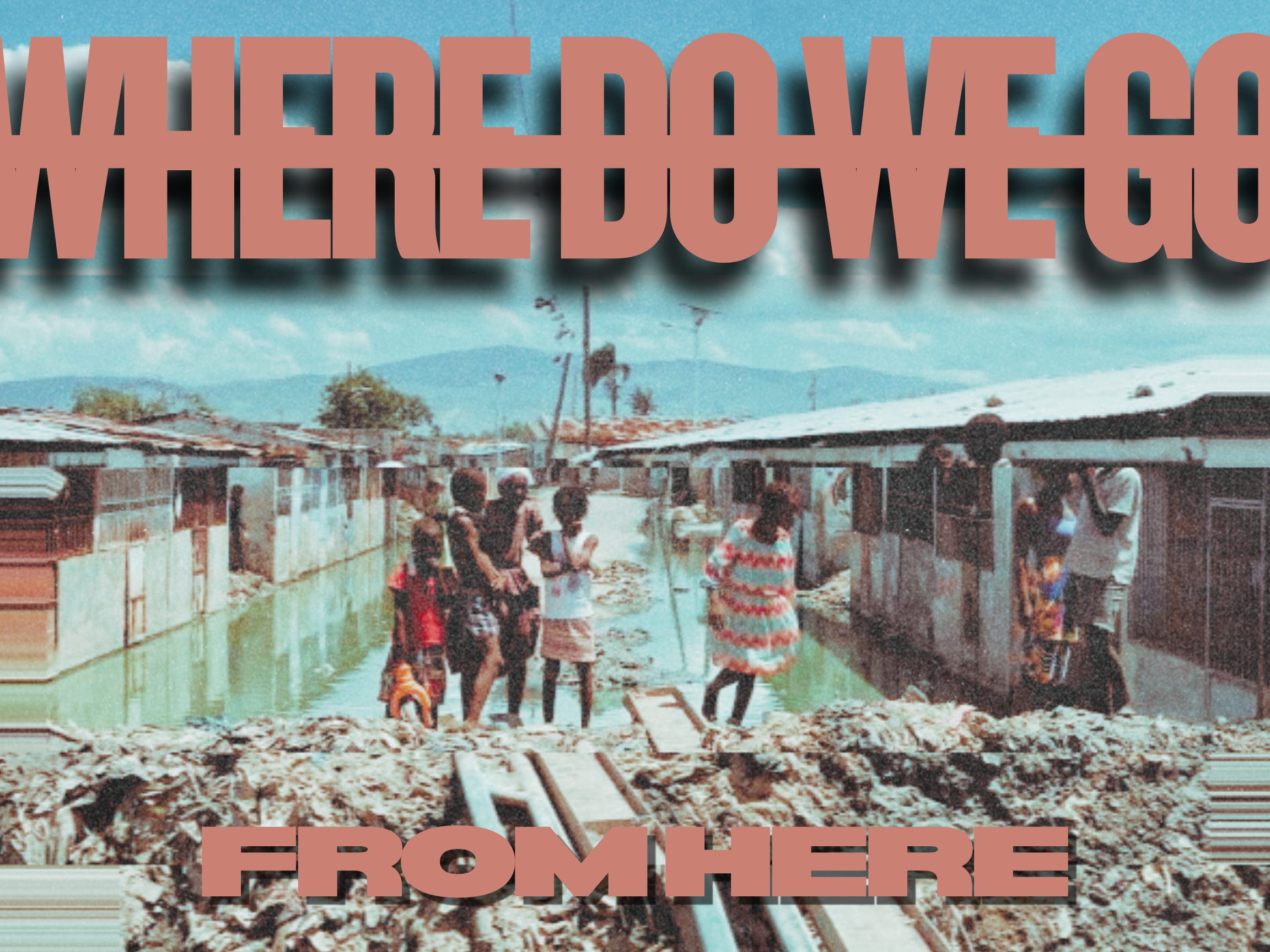
The undeniable truth that this land, this “melting pot” governed by one flag, was forcibly taken from Native Americans by way of genocide, disease, systemic displacement, and many other atrocities is enough for every American to understand they have no right to even think about who should and shouldn’t be here.
That is why a ruling like the one passed this past Thursday is so disgusting. In yet another sweeping 6-3 decision this time in the cases of Mullin v. Doe and Trump v. Miot, the U.S. Supreme Court has declared that federal courts do not have the power to block the administration from ending Temporary Protected Status (TPS). The Court ruled that under federal law, judges cannot review these types of executive decisions. They also rejected claims that the policy was driven by discrimination, declaring that the administration's goals for ending the program were legally acceptable and racially neutral. This decision essentially dissolves the legal protections set in place to prevent the unfair deportation of hundreds of thousands of Haitian (and Syrian) immigrants.
When you think about the goal of the Trump administration it makes sense that such a decree would be made. The goal of any tyrannical regime is to “other” a group or several groups and attribute all the failures of the government to said group. Once you’ve successfully othered, all you need to do is make sure those in support of you believe that once you’ve “eradicated the threat”—the threat being the parties you’ve othered, all will be well in paradise. This conveniently prevents them from thinking about the fact that their leaders are public servants and thus are responsible for making sure social services are accessible to all constituents.
When an administration’s biggest accomplishment is a crackdown on immigration, when many American citizens are struggling to even have a standard of living, let alone a high one, is such a disgrace. To the trained mind, this is a gross mismanagement of tax-payer funds, an abomination even. But to the untrained mind, one moved to extremities by their carnality and led exclusively by primitive desires to be in dominance over another, this is the missing answer.
The America we inhabit, using its European predecessors as a blueprint for “civil society” (one of history’s biggest lies) is the product and personification of unending exploitation. You’re only worth as much as you can pay, as much as we can take. And it’s always been that way.
If you take a look at America’s historical (and ongoing) involvement in destabilizing Haiti, you’ll see the utility-based conquest. Due to increased instability in Haiti in the years leading up to 1915—a period stained by the assassination or overthrowing of seven Haitian presidents (between 1911 and 1915 obviously by foreign parties)—U.S. policymakers grew anxious of other foreign powers threatening their dominance. So, in 1914, the Wilson administration sent U.S. Marines into Haiti. They didn’t arrive as a “civil society” offering aid as the textbook historical accounts will tell; they came to steal $500,000 from the Haitian National Bank for “safe-keeping” in New York, effectively seizing total control of the nation’s banking.
When Haitian President Jean Vilbrun Guillaume Sam was assassinated in 1915 and the country went into chaos again, President Wilson once again deployed the Marines, ostensibly to “prevent anarchy.” In actuality, this invasion was entirely about protecting U.S. assets in the region against countries like Germany. Can you imagine someone taking over half your apartment, but you’re barred from stepping foot into theirs. It’s preposterous, and yet precisely the Western guide to success and financial independence.
The hostile acquisition culminated in the Haitian-American Treaty of 1915. The articles of this forced agreement created the Haitian Gendarmerie—essentially a military force made up of U.S. citizens and Haitians, completely controlled by the U.S. Marines. Overnight, the United States stripped the nation of its sovereignty, gaining complete control over Haitian finances and granting itself the arbitrary right to intervene in Haiti whenever the U.S. Government deemed it necessary. To ensure compliance, the U.S. Government forced the Haitian legislature to elect a new, pro-American puppet President (a method the U.S., U.K., France, Belgium, Portugal, Spain, Italy and Canada have all employed, all without counter-invasions) Philippe Sudré Dartiguenave, in August 1915. Unsurprisingly, forcing a leader on the nation who did not represent the choice of the Haitian populace only deepened civil unrest.
But the moment you try to institute defenses against perpetual exploitation, you become vulnerable to violence. Because now you are denying an insatiable void of a force the ability to bleed you dry, when they expected you to see it as a God-given blessing that they’d even want to take from you, small as you are.
Case in point: following the election the U.S. completely infiltrated, the Wilson administration attempted to bully the Haitian legislature into adopting a new constitution in 1917 to force a provision allowing foreign land ownership. This convention had been strictly outlawed since the Haitian Revolution as a vital protection against exactly this kind of foreign control. Suspicious of what it might mean to surrender this long-standing protection, the legislature rejected the new constitution outright. As these law-makers bravely began drafting a new anti-American constitution to protect their land and people, the United States forced President Dartiguenave to dissolve the legislature entirely. A governing body did not meet again until 1929.
I think my and most people’s anger comes from the fact that this country has benefited and cashed in trillions (and then some) off the backs of Haitians and still turns over tens of billions of dollars in GDP as a result of their fiscal and physical contributions. And upon cashing in said check, would then have the audacity to fix their mouths, and their legislation to tell Haitians to “go back to where they came from”.
The same home that’s been raided time and time again? I think not.
At this point, the inability to understand that we’re all migrants under different circumstances is a fundamental character flaw and it’s holding us in place, keeping us from a collective future.
The ruling truly shook me, so I wanted to speak to my good friend, Jeanine (neen's notebook)—a master’s student at John Hopkins University studying Health Policy who’s of Haitian descent and a Brooklyn-native—on how she’s been feeling lately. So I’d like to share what she shared with me,
What was your initial reaction when you heard about the Supreme Court’s ruling?
“I was scared. Like many others, I have Haitian family members who are directly threatened by this ruling. For them, tt becomes a choice of either living in fear in the U.S. or living in fear in Haiti. It threatens livelihoods, and makes people fear even going outside.”
How does this decision directly affect your sense of security in the U.S.?
“This has definitely heightened my fear, though I’ve been fearful since ICE—already fearing misrepresentation—I now feel that at a heightened level. I mean, I’m clearly a Haitian woman. And based on other situations we’ve seen, I know my citizenship doesn’t come with protections.”
What are the biggest immediate worries you or your family are facing right now?
“Our biggest worries are that being American citizens won’t matter in the grand scheme of things.
My identity can’t be hidden. My last name is literally Toussaint, the name of the leader of the Haitian Revolution, so it’s not like I can even lie to protect myself. Something that was once something to embrace is now something I feel fearful to acknowledge. My name has a lot of power in my community and makes me feel proud of my heritage, but now the U.S. is trying to make me feel like this is something to be ashamed of. My heritage is not being acknowledged.
There are so many Haitian communities that have built the entirety of Brooklyn’s infrastructure. It’s like we work, serve, and give all these things only to be told to go back to our country—to contribute to a culture that doesn’t recognize that you’re important. I mean you go to a Haitian bakery to get patties, what would Flatbush look like if all those Haitian vendors weren’t there anymore to feed the community affordably?
I guess the U.S. is trying to decide for Haitian people that the next step is for us to go home.”
How do you feel about leaders like DHS Secretary Markwayne Mullin speaking out against ending these protections? He expressed the following in a conversation with CNN’s Jake Tapper:
“Temporary protected status was never intended to be permanent. And there’s a lot of people that came over here 15, 20 years ago underneath TPS that’s already changed their status,…The whole time these individuals have been here underneath the temporary protected status, they could have applied for a visa,” he said, adding that the individuals also could have applied for lawful permanent residency…But the status itself can be ended in its name itself by saying temporary,”
“I’m met with this confusion. This is what happens with a lot of policymakers—they don’t have any context because this is not their experience. It’s so misinformed to say what people ‘should have done,’ as if these processes don’t come with so many barriers that prevent people from acquiring the legal status they need. There are language barriers, family obligations, the fear of deportation, and so on.
You cannot make a decision for an experience that is not yours. That’s the problem with policy; lived experiences aren’t measured up to ‘expertise.’ They don’t have people in that room who could provide actual context. People are just going based on what they think, and as long as everyone in that room is in agreement, it get passed.”
What do you think this decision means for the future of Haitian immigrants wanting to build lives in America?
“For those who want to build lives here, it presents just another barrier. You never know what people are running from or even where they are running to. I don’t want to sound vulgar, but people will die. Policy decisions cause people to die, and it’s only a matter of time before we see it happen.
This also presents a heavy burden to those who are currently working to provide for their families in Haiti. People work here specifically to send money and barrels of supplies back home. People should be able to escape harm and gain new footing, but all these new policy decisions are making it harder to achieve.
A lot of people don’t actually want to stay in the U.S. permanently. If the U.S. was actually helping Haiti be in a better position as opposed to destabilizing the country, then maybe more people would be able to stay in their home countries. More people wouldn’t find themselves staying here for 5, 10, or 15 long years. It’s like you are taking away everything you gave me, as if I owed you something. It’s going to be harder for everyone to basically just live their lives.”
I want to end with a quote from Karl Marx in “Private Property and Communism”, the academic credited with founding communism (though it’s existed in non-Western societies before he proposed it as a school of thought).
“Private property has made us so stupid and one-sided that an object is only ours when we have it – when it exists for us as capital, or when it is directly possessed, eaten, drunk, worn, inhabited, etc., – in short, when it is used by us.
Things have value even if they cannot be used. This is fundamental to progress.

Written & Designed by Ife Giwa
Copyright © 2026 Perspective Network™. All rights reserved.
Questions? Email us at perspectivenet25@gmail.com
Tune in to Unsubscribe™ every week for the latest news!